After the summer, hair is often dry, dull and prone to tangling, and the colour fades or turns brassy. The good news: most of this can be put right in 3–4 weeks of proper care. The bad news: no product can truly “seal” split ends. Here’s what to do, step by step.
What summer does to your hair
- The sun breaks down the proteins in the hair’s outer layer (the cuticle): the scales lift, the hair loses shine and moisture, the colour fades, and blonde hair takes on a warm, yellowish tinge.
- Sea salt draws moisture out of the hair. It becomes coarse and tangles — and then breaks when you brush it.
- Chlorine strips away the protective layer of natural oils and makes the hair porous: the scales lift and the hair holds on to moisture less well. Light hair sometimes turns green after the pool — more often because of copper and other minerals in the water than the chlorine itself.
- Wind and sand tangle the hair and rough it up.
In Lisbon this isn’t just a holiday issue: strong sun, beaches and salty Atlantic wind are with us from spring until late autumn. So rather than “treating” your hair once a year, it’s better to protect it all year round and give it an autumn reset.
Signs your hair needs some help
- dryness and coarseness along the lengths, especially at the ends;
- dullness: no shine even after styling;
- frizz and tangles;
- breakage and split ends;
- faded, uneven or brassy colour.
Step 1. Trim the ends
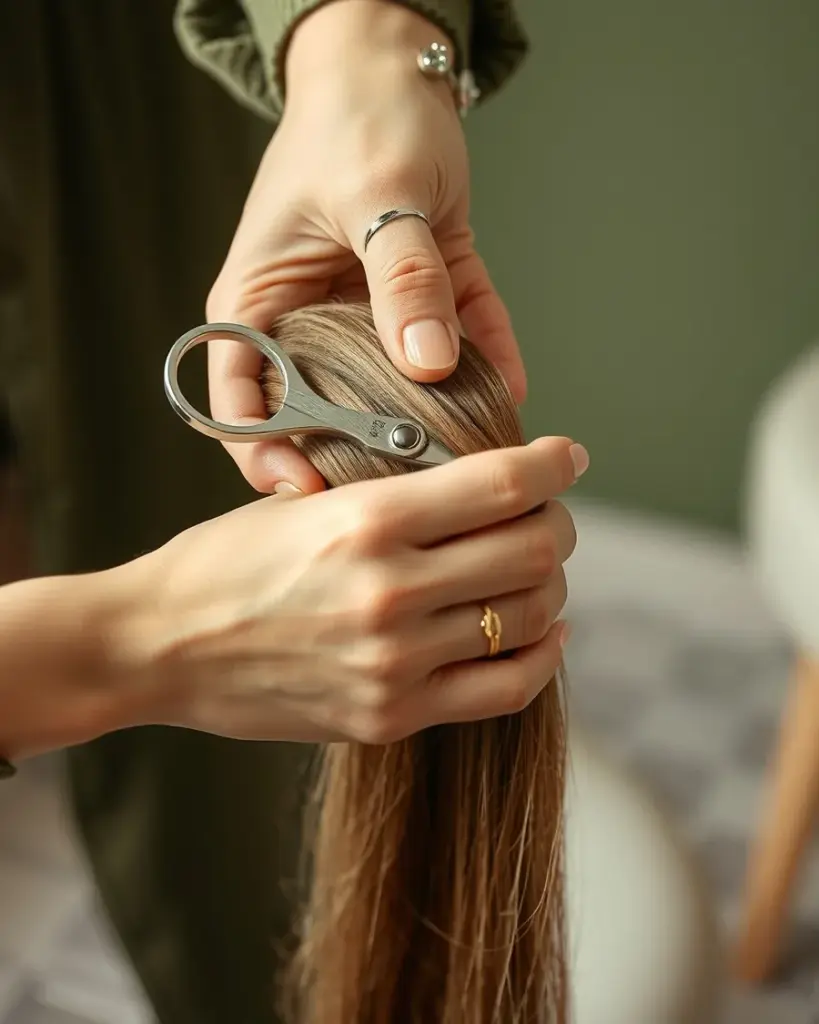
This is the only way to get rid of split ends. “Sealing” products just glue them together temporarily — until the first or second wash. If the ends aren’t cut, the hair will keep splitting further up.
After the summer, taking off 1–3 cm is usually enough. If the damage is severe, your hairdresser may suggest going shorter — that’s decided on the day, depending on the condition of your hair. And no, trimming doesn’t make hair grow faster: hair grows from the root. It simply helps keep your length healthy.
Step 2. How to help your hair recover at home: 3–4 weeks of care
- a mild shampoo, and conditioner after every wash;
- a mask once or twice a week;
- a leave-in product or a couple of drops of oil on the ends;
- heat protectant, and a medium or cool hairdryer setting;
- detangling from the ends with a wide-tooth comb, ideally with conditioner in.
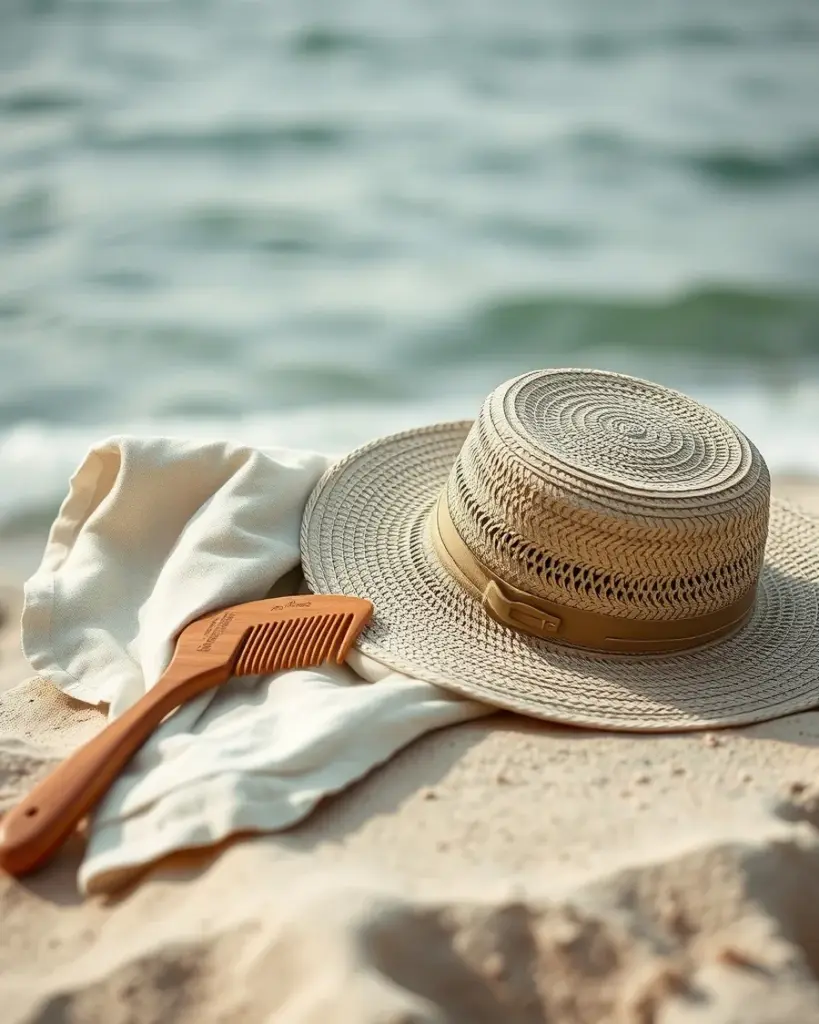
Dry hair is usually short of moisture, while hair that’s parched and brittle sometimes needs protein. A simple test: gently stretch a wet hair. If it stretches a lot and doesn’t spring back like an elastic band, it needs protein; if it snaps straight away, it needs moisture. This isn’t a diagnosis, just a pointer — your hairdresser can tell you more accurately.
There’s no need to buy everything at once: consistency matters more than the number of products. And skip the home remedies with lemon juice: in the sun it lightens and dries the hair even further.
Step 3. Refresh your colour
If your colour has faded or turned brassy, toning (a gloss) is often enough: it brings a cool tone back to blonde hair and depth and shine to dark hair, without lightening again. It’s best to hold off on any major colour work after the summer until your hair has recovered a little. For more on keeping your colour, see “How to care for coloured hair so the colour lasts longer”.
What the salon can do — and what only time will fix
At the salon, your hairdresser will assess the length and porosity of your hair (how damaged its outer layer is), trim the ends, recommend aftercare and, if needed, tone your colour. Repair treatments make hair noticeably smoother and more manageable, but they can’t fully restore damaged lengths: those are only replaced over time, as you gradually trim the ends.
Hair loss in autumn: seasonal shedding
Many people notice more hair in their brush in autumn. Research does confirm that shedding is seasonal, peaking around October–November. It usually settles on its own within a few weeks. Masks and oils work on the lengths, not the roots, so they won’t stop shedding.
See a dermatologist or trichologist (a specialist in hair and scalp conditions) if:
- the shedding is heavy and lasts longer than 2–3 months;
- your hair is visibly thinning or you have bald patches;
- your scalp is itchy or flaky.
It’s best not to take supplements without blood tests and a doctor’s advice.
To make next summer easier
- wet your hair with fresh water and apply conditioner before swimming;
- rinse it straight after the ocean or the pool;
- wear a hat or use a spray with a UV filter;
- on the beach, put long hair in a loose plait so it tangles less.
An autumn visit to Persona: we’ll assess the condition of your hair, trim the ends and refresh your colour if needed. Women’s haircut — 70 €, toning — 90–160 €, and the consultation is free. You can book online; all our services are on the Hair page.